Categorie
publication

Early Christmas for the lab: new publication!

This year, we celebrate Christmas early!

We are happy to announce the publication of our latest study, which identifies the sirB2 gene as a key fitness determinant of Pseudomonas aeruginosa under host-relevant, oxygen-limited conditions. In particular, we show that SirB2 supports redox homeostasis and anaerobic respiration, thereby contributing to bacterial adaptation in cystic fibrosis (CF) airways.

In particular, loss of sirB2 leads to redox imbalance and impaired anaerobic fitness, thereby triggering the emergence of rugose small-colony variants (RSCVs), enhanced biofilm formation, and increased virulence in multiple infection models. Our findings reveal a tight connection between metabolic state, phenotypic diversification, and pathogenic potential, highlighting redox homeostasis as a critical driver of chronic infection adaptation.

A particular thank you to Dr. Valerio Baldelli and Dr. Stacy Julisa Carrasco Aliaga, who jointly led this work and all collaborators involved in this multidisciplinary effort.

Read more here:
https://www.tandfonline.com/doi/abs/10.1080/21505594.2025.2605800

Reference:
Baldelli, V., Carrasco Aliaga, S.J., Colque, C.A., Mazzola, F., Ravishankar, S., Johansen, H.K., Molin, S., Raffaelli, N., Paroni, M., Landini, P., & Rossi, E. (2025). The Pseudomonas aeruginosa sirB2 gene is a fitness determinant of anaerobic growth and its inactivation affects virulence and rugose small colony variants emergence. Virulence.

Categorie
publication Uncategorized

New Publication Alert: A Novel Antivirulence and Biofilm-Targeting Strategy Against Uropathogenic E. coli

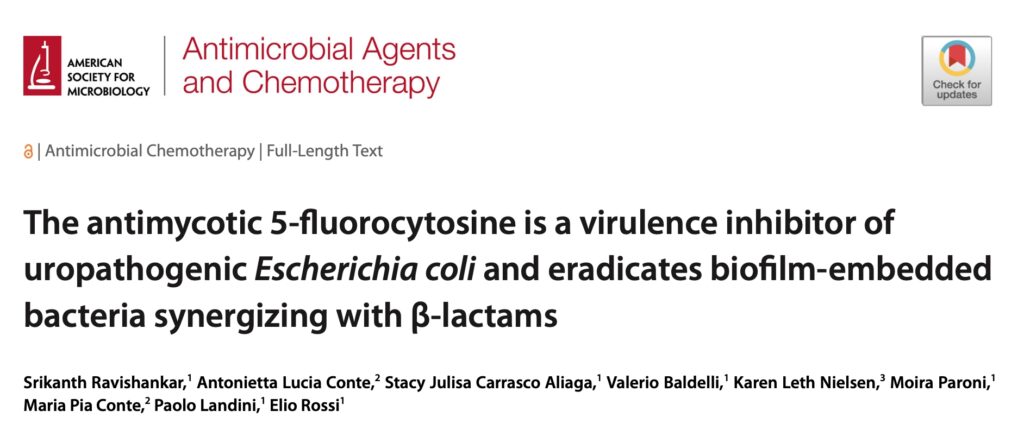
We are excited to announce the publication of our latest study, which reveals that the antimycotic drug 5-fluorocytosine (5-FC) functions as a potent virulence inhibitor against uropathogenic Escherichia coli (UPEC). Notably, our findings demonstrate that 5-FC not only disrupts key pathogenic traits of UPEC but also effectively kills bacteria within preformed biofilms—a major challenge in treating chronic and recurrent infections. This study highlights the potential of repurposing non-antibiotic compounds to combat bacterial infections while mitigating resistance development.

We extend our warmest congratulations to Dr. Srikanth Ravishankar, a former PhD student of our lab, who led this work and recently started a new position at the Institut Pasteur in Paris. We look forward to seeing his continued contributions to microbiology!

Read more here: https://journals.asm.org/doi/10.1128/aac.00280-25


Reference:
Ravishankar, S., Conte, A.L., Aliaga, S.J.C., Baldelli, V., Nielsen, K.L., Paroni, M., et al. (2025) The antimycotic 5-fluorocytosine is a virulence inhibitor of uropathogenic Escherichia coli and eradicates biofilm-embedded bacteria synergizing with β-lactams. Antimicrob agents Chemother e0028025.

Categorie
Uncategorized

New publication from the lab!

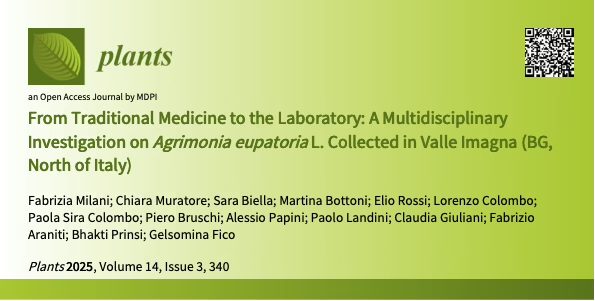
Congratulations to our former research assistant, Sara Biella! Sara played a key role in our collaborative study on the antimicrobial and antibiofilm activity of Agrimonia eupatoria against Escherichia coli, Staphylococcus aureus, and Staphylococcus warneri. Traditionally used in Northern Italy (Valle Imagna) for its healing properties, this medicinal plant was analyzed for its chemical composition to evaluate its potential as a natural disinfectant and wound healer. Our team identified several beneficial compounds, including phenolics and volatile organic compounds, which may contribute to its antibacterial effects. Notably, our findings revealed that infusions and decoctions of A. eupatoria effectively inhibit certain bacteria, reinforcing its traditional use in wound healing.

Read more here: https://doi.org/10.3390/plants14030340


Reference:
Milani, F., Muratore, C., Biella, S., Bottoni, M., Rossi, E., Colombo, L., et al. (2025) From Traditional Medicine to the Laboratory: A Multidisciplinary Investigation on Agrimonia eupatoria L. Collected in Valle Imagna (BG, North of Italy). Plants 14: 340.

Categorie
Team

Starting the Year with a New Team Member!

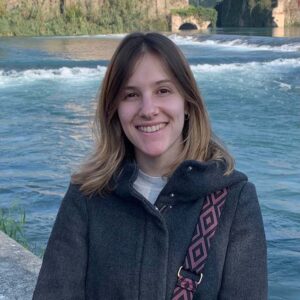
We’re excited to welcome Giulia as she begins her research fellowship on February 1! She will be contributing to our ongoing efforts by exploring compounds derived from traditional Chinese medicine. Her first project focuses on rebuilding our clinical isolate collection of ESKAPE pathogens. This includes performing whole-genome sequencing and conducting detailed phenotypic characterizations to enhance our understanding of these critical pathogens.